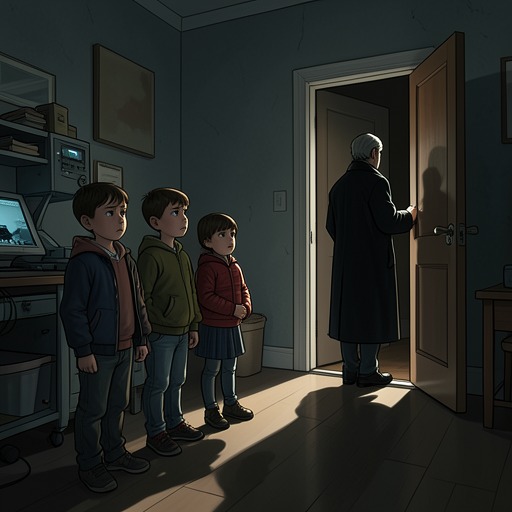
Abraham Portman’s dementia
Miss Peregrine's Home of Peculiar ChildrenAbraham Portman’s dementia becomes a crisis for his family when the wartime stories he once invented take hold as realities he fears are happening again. His growing paranoia brings repeated urgent calls to Jacob and makes the guns in his home a danger as well as a legacy of his soldiering past.
Development and Effects
The decline begins subtly: Abraham forgets groceries and mistakes Jacob’s mother for his aunt. Over the summer, however, his dementia takes a more distressing turn. The monsters and enchanted island from his stories about the war no longer seem to him like inventions; they become oppressive realities. In the weeks before the call, he grows especially agitated, and Jacob’s parents consider placing him in a home because they fear he may be unsafe on his own.
Jacob is the family member who receives Abraham’s apocalyptic phone calls. Their recurrence makes the decline part of an ongoing relationship rather than an isolated episode: Jacob recognizes that he has heard this kind of talk before, even as the danger now seems more immediate.
Paranoia and the Missing Key
During one call, Abraham insists that his pursuers have found him and asks what he can defend himself with. Jacob attempts to redirect him by asking whether he has taken his pills, then tries to calm him and offers to bring over a video. Abraham refuses reassurance and warns Jacob to stay away. When Jacob reminds him that he killed the monsters during the war, Abraham answers that he did not kill them all and continues searching for a key.
The key opens a large locker in Abraham’s garage containing enough guns and knives to arm a small militia. He had spent years collecting weapons, attending out-of-state gun shows, hunting, and taking his reluctant family to rifle ranges. The collection gives material force to fears that might otherwise remain delusions: Abraham believes he is under threat, and the means to arm himself are close at hand.
Family Response and Significance
Jacob’s father has taken the key to the locker. He explains that people who have been soldiers or experienced trauma may become especially attached to guns; Jacob understands this as part of Abraham’s inability to feel safe, even at home. But the same weapons that may have represented security now make the house more dangerous as dementia and paranoia overwhelm Abraham.
Jacob lies that he does not know where the key is, while Abraham searches the house. Abraham finally tells Jacob to let his father keep it, adding that he may as well have his dead body too. Jacob ends the call as politely as he can and then phones his father. The episode places Jacob between an increasingly frightened grandfather and a parent trying to limit the danger, showing how Abraham’s illness strains the family’s care and trust. It also makes the stories of monsters inseparable, for Abraham, from an immediate fear of pursuit and the weapons he believes he needs to survive.